top of page
MY
BLOG
Follow my journey in education where I explore high-quality, innovative teaching and learning practices, approaches and strategies.
SUBSCRIBE & GET NEW POSTS SENT RIGHT TO YOUR INBOX!
All Posts

Unleashing Student Creativity with Project-Based Learning: A Journey Inspired by Johnny Harris
Johnny Harris is a journalist and YouTuber with over a million followers. He travels the world to capture and share compelling stories. Watching his work, I found myself asking a question: What if we could create the next generation of Johnny Harrises with a group of third graders? To explore this idea, we decided to adapt a standard social studies unit into a Project-Based Learning (PBL) experience. For those unfamiliar, PBL is an educational method where students engage in

David Lee
Jan 233 min read
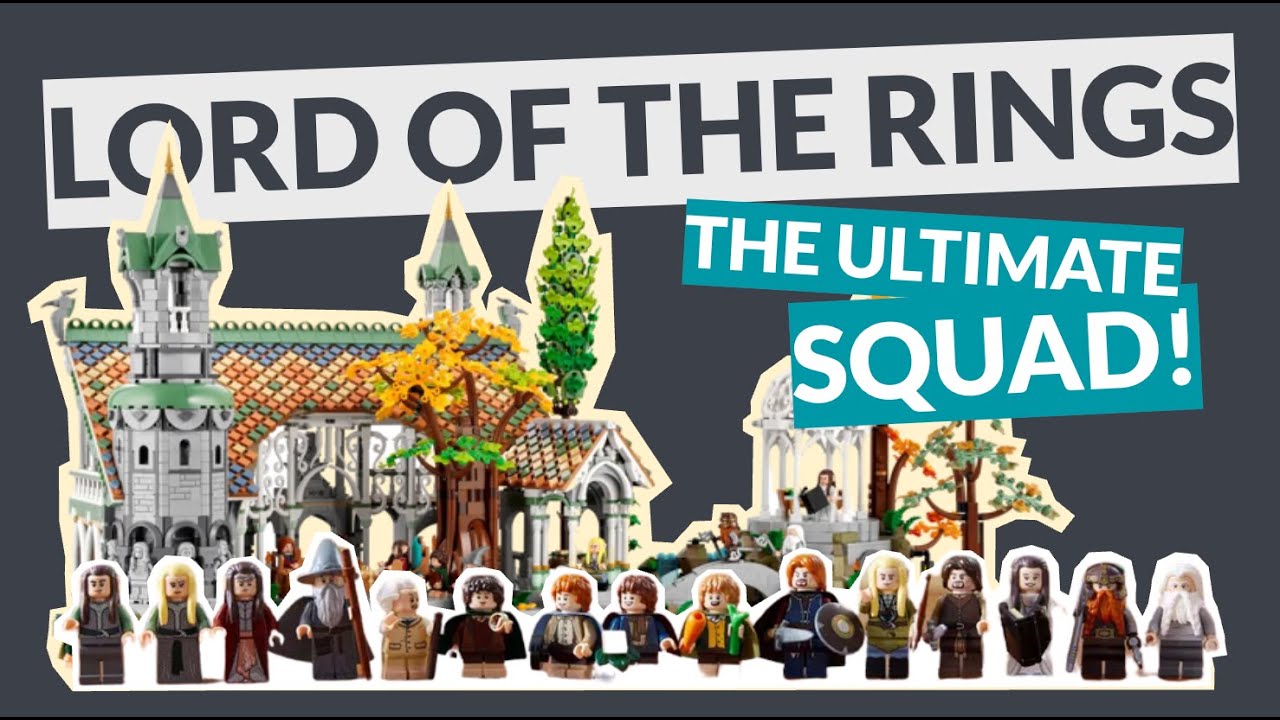
Building the Ultimate Collaborative Team: Lessons from the Lord of the Rings
Recently, I found myself lost in a project that was 6,167 pieces of pure joy: The Rivendell Lego set. As I assembled this feat of engineering, taking in the intricate details of the Council of Elrond, I wasn't just admiring the bricks. As a lifelong Lord of the Rings fan—one who rewatches the trilogy and The Rings of Power annually—I started thinking about the group that formed there. The Fellowship of the Ring was the ultimate team. They were a mix of races and backgrounds
David Lee
Jan 222 min read

UNITING PROJECT-BASED LEARNING & DESIGN THINKING FOR LIMITLESS CREATIVITY
I received an exciting invitation from my colleague Jennifer Osbourne to facilitate a Design Thinking workshop for the "Quest" program . Quest is a unique, yearlong initiative where high school students step away from traditional coursework to pursue interdisciplinary projects with professional clients. It involves internships, fieldwork, and rigorous research guided by the Quest team: Jennifer, Mare Stewart, and Tom Flanagan. For me, this was the ideal scenario to demonstra
David Lee
Jan 211 min read

Designing Schools as Ecosystems: Lessons from the "Cloud Forest"
Last year, I visited the Flower Dome and the Cloud Forest at Gardens by the Bay in Singapore with my family. Standing in front of the magnificent 35-meter indoor waterfall and walking through the cooled conservatories (kept perfectly between 23°C and 25°C), I was blown away. These aren't just tourist attractions; they are marvels of design. Horticulturalists and soil specialists utilized a deep understanding of light levels, plant physiology, and soil science to bring togethe
David Lee
Jan 202 min read

Empathy: Uncovering the Hidden Layers of Design during "Low Tide"
Most people think high tide is when the ocean comes alive. The waves are crashing, the water is high, and the energy is palpable. But recently, during a low tide walk at Changi Beach, I realized the opposite is true. When the water receded, a hidden world appeared: sea cucumbers, snail egg sacs, and complex ecosystems that are completely invisible from the boardwalk. This is exactly how Empathy works in Design Thinking. Too often, we attempt to solve problems at "high tide."
David Lee
Jan 202 min read

Igniting Inquiry: The Art of the Entry Event in Project-Based Learning
In Project-Based Learning (PBL), the beginning is everything. We don't want to just assign a project; we want to ignite a fire. This is the purpose of the Entry Event . An entry event is a learning moment at the start of a unit designed to provoke curiosity within an authentic context. The goal isn't just excitement; it is to inspire students to take action and generate the "Need to Know" questions that will drive their inquiry. I collaborated with Gillian Lait, a 1st-grade t
David Lee
Jan 162 min read


eduPermaculture: New Design Approach for Education
Why is it so critical for us to design learning experiences that mirror real-world scenarios? The answer lies in preparation. When we create authentic scenarios, we help students develop the practical skills, critical thinking abilities, and problem-solving capabilities they will actually need outside the education system. It bridges the gap between theory and practice, allowing students to see the purpose behind their work. I often think of an analogy involving two awe-inspi
David Lee
Jan 152 min read

Document, Reflect, Create: Why I Record My Life AND My Teaching
It had been about three years since I last saw my mom. Because of everything that happened in the last couple of years, she hadn’t even met my youngest child yet. When she finally visited, I wanted to be intentional about how I documented the experience. I didn't just take photos; I turned to videography. For me, short films capture the essence of a moment—the emotions and depth—in a way that static images cannot. I don’t have any video footage of myself as a child; all our o
David Lee
Jan 152 min read

Why Formula 1 (F1) is the Ultimate STEM Education Classroom
We often think of Formula 1 as just a sport, but I view it as the ultimate STEM learning experience. The real-world context is high-stakes: designing, building, and racing the fastest cars in the world for the most prestigious competition. To achieve this, teams must blend science, technology, engineering, and mathematics seamlessly. As highlighted in Animagraffs’s analysis of F1 cars, these machines are a masterclass in applying STEM concepts—from designing suspension and se
David Lee
Jan 142 min read

How We Designed a Strategy for High-Quality STEM Learning using Roger Martin's Approach
Change is formidable, especially in schools with deep heritage. Last year, I had the privilege of leading the Technology, Computer Science, and Robotics (TCR) curriculum review. Our goal? To move from our current state to an "ideal state" of high-quality STEM learning. To guide this process, I looked to IDEO for their design thinking approach and strategy advisor Roger Martin , who defines strategy as “a set of choices that you can make today, in the face of uncertainty, in
David Lee
Jan 132 min read

Beyond the Industrial Model: Using Design Thinking to Reimagine School
We often talk about equipping students with 21st-century skills, yet many of our school models are still built on the architecture of the industrial era—prioritizing efficiency and batching students by "manufacturing date." Sydney Schaef, from the organization reDesign , believes there is a better way. Her work focuses on helping educators transition from these industrial roots toward "learner-centered communities." The primary tool for this shift? Design Thinking. Because th
David Lee
Jan 101 min read

Storytelling at Google HQ
The Day I Choked Up at Google HQ: A Real-Time Lesson on the Power of Storytelling Standing in the sleek, modern offices of Google Headquarters in Singapore, I expected to feel professional. I expected to feel prepared. What I didn’t expect was to be fighting back tears in the middle of my own presentation. I had the incredible privilege of being invited by Jim Sill to present a workshop on the power of YouTube at Google HQ. I was co-presenting with my good friend and colleagu
David Lee
Jan 72 min read

What Happens When Google Opens Its Doors to Educators?
What happens when you bring the world’s most passionate educators together under one roof? Magic. I had an incredible opportunity to attend the Google for Education Champions Symposium , and I’ve captured the entire experience in my latest video. This wasn’t just a typical professional development workshop. It was a three-day, high-intensity residency designed to bridge the gap between "using technology" and "leading innovation." As a Champion, the experience at the Google of
David Lee
Jan 63 min read
Every Educator is a Designer
Seeing the wave of "I’m an ADE!" posts is bringing back a rush of nostalgia. I vividly remember the excitement of getting accepted to the Apple Distinguished Educator program for the 2019 Gold Coast Institute. To the Class of 2025 : Huge congratulations! You are joining a family that will challenge and lift you up. To those who didn’t get in this year: I see you. Please know a badge doesn’t define your worth. Your impact is real. Keep building. At that Institute, I gave a t
David Lee
Dec 23, 20251 min read

5 Ways to Stop "Initiative Overload" and Design a Cohesive Vision
Is Your School Strategy Starting to Look Like an Ugly Holiday Sweater? It’s the last week before winter break. The hallways are buzzing, the coffee consumption is at an all-time high, and the "Ugly Holiday Sweaters" are out in full force. You know the ones: tacky, garish, and covered in random festive elements that seem to have been thrown together with a glue gun and a prayer. I never quite understood the appeal until my favorite sports teams started making them—then I was a
David Lee
Dec 23, 20253 min read

Part Four: Strategies for Sustaining K-12 STEM Cohesion
The extensive work of building a foundation ( Part 1 ), gathering critical data ( Part 2 ), and redesigning courses ( Part 3 ) culminated in a revised Scope and Sequence (S&S). This final phase was dedicated to institutionalizing the changes, creating a long-term strategic plan for sustained excellence, and, critically, celebrating the K-12 cohesion achieved. A program is only as strong as its commitment to continuous improvement. The Final Review: Cementing the Ideal State W
David Lee
Dec 15, 20253 min read

Part Three: Designing for Coherence: Creating Clear and Future-Ready STEM Pathways
The extensive data collection and the identified strategic themes ( Part 2 ) converged on a singular, critical mandate: to create a coherent, streamlined, and future-ready STEM pathway for every student, from K-12. The challenge was not just creating new courses, but clarifying existing ones, eliminating confusion, and ensuring true vertical alignment. Clarifying the Core: The Evolution of "Technology" to "Technology & Design" A key area of confusion emerged around the 'T' in
David Lee
Dec 15, 20254 min read

Part Two: Systems Thinking and Stakeholder Data - The Engine for STEM Program Evolution
The initial foundational work—the philosophy, the department, the common pedagogy, and the current-state audit ( part 1 )—yielded a clear diagnosis: a multitude of complex, interconnected projects needed to be addressed across multiple grade levels. The transition from identifying needs to executing solutions is where many initiatives fail. This phase required not just a tool, but a strategic mindset shift toward systems thinking, coupled with the critical infusion of exte
David Lee
Dec 15, 20255 min read

Part One: Strategically Laying the Foundation for a K-12 STEM Program
The shift from a good idea to a robust, functioning K-12 STEM program is not achieved through enthusiasm alone; it requires a disciplined, strategic approach built on an unshakeable foundation. We’ve all seen well-intentioned programs falter because the underlying structural components were overlooked in the race to simply “get started.” Our recent work focused on ensuring this didn't happen—we moved from a completed curriculum review to a structured implementation process ce
David Lee
Dec 15, 20255 min read


Design Thinking Standards in Education
The Design Thinking Standards (DTS) provide educators a foundation of what students are expected to learn and do when using the design thinking method. These learning goals are guidelines that educators can use, adjust and modify to meet the needs of their students. The following standards were developed based on the work and teachings of the d.school (Institute of Design at Stanford University), a leader in design thinking education, and its K12 Lab Network , a program
David Lee
Dec 12, 20251 min read
bottom of page