Why I Stopped Aiming for "Perfect" (And Why You Should Too)
- David Lee
- Dec 3, 2025
- 2 min read

I am 40 years old. I found out this year that I am dyslexic.
For decades, I interpreted my struggles with rote memorization or fine details as simple "weaknesses." I thought I was just incapable.
But that diagnosis changed everything. It didn't just explain my struggles; it highlighted my strengths. I realized my brain had made a trade-off: I might miss the minutiae, but I excel at seeing systems, patterns, and big-picture connections.
I wasn't incapable. I just think differently and I am iterative.
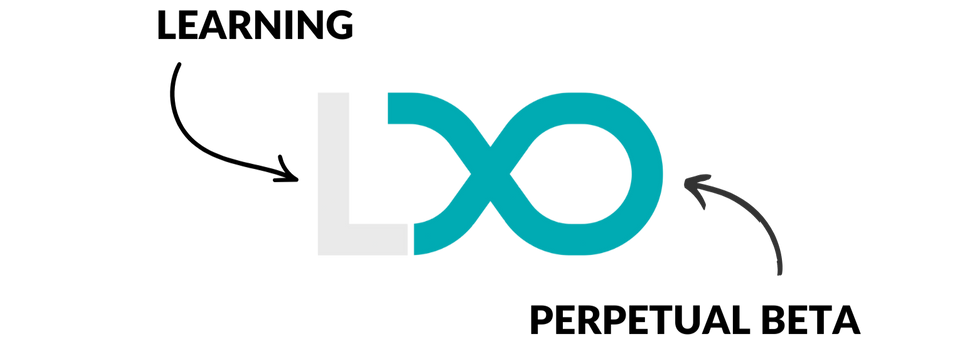
That realization really connects to my philosophy that drives my work and life today: I am Learning in Perpetual Beta (LPB).
What is "Perpetual Beta"?
We often treat learning as a destination—a mountain top we reach where we can finally say, "I’m an expert. I’m done."
LPB rejects that. It borrows a mindset from the software world. A "Beta" version of an app isn't finished. It’s buggy. It’s rough. But it’s out there. It’s being tested, broken, and improved in real-time.
Here is how I break it down:
The “Learning” aspect is the recognition that learning is an active verb, not a passive noun. It is not the accumulation of information, but the act of making sense of the world.
The “Perpetual” aspect is the commitment to staying open to growth throughout our learning journey and life.
“Beta” comes from the software world, where a beta version is not final—it’s ready enough to test, gather feedback, break, and improve.
Why This Matters Now
Whether you are an educator, a student, or a creative, the pressure to be "perfect" is paralyzing. But look at how the real world works. Designers prototype. Scientists revise hypotheses. Artists sketch. If we want to build a culture of innovation, we have to stop hiding our process. We have to be willing to be unfinished.
So, welcome to my blog. Everything here is in Beta. And I hope that encourages you to be in Beta, too.

Comments